
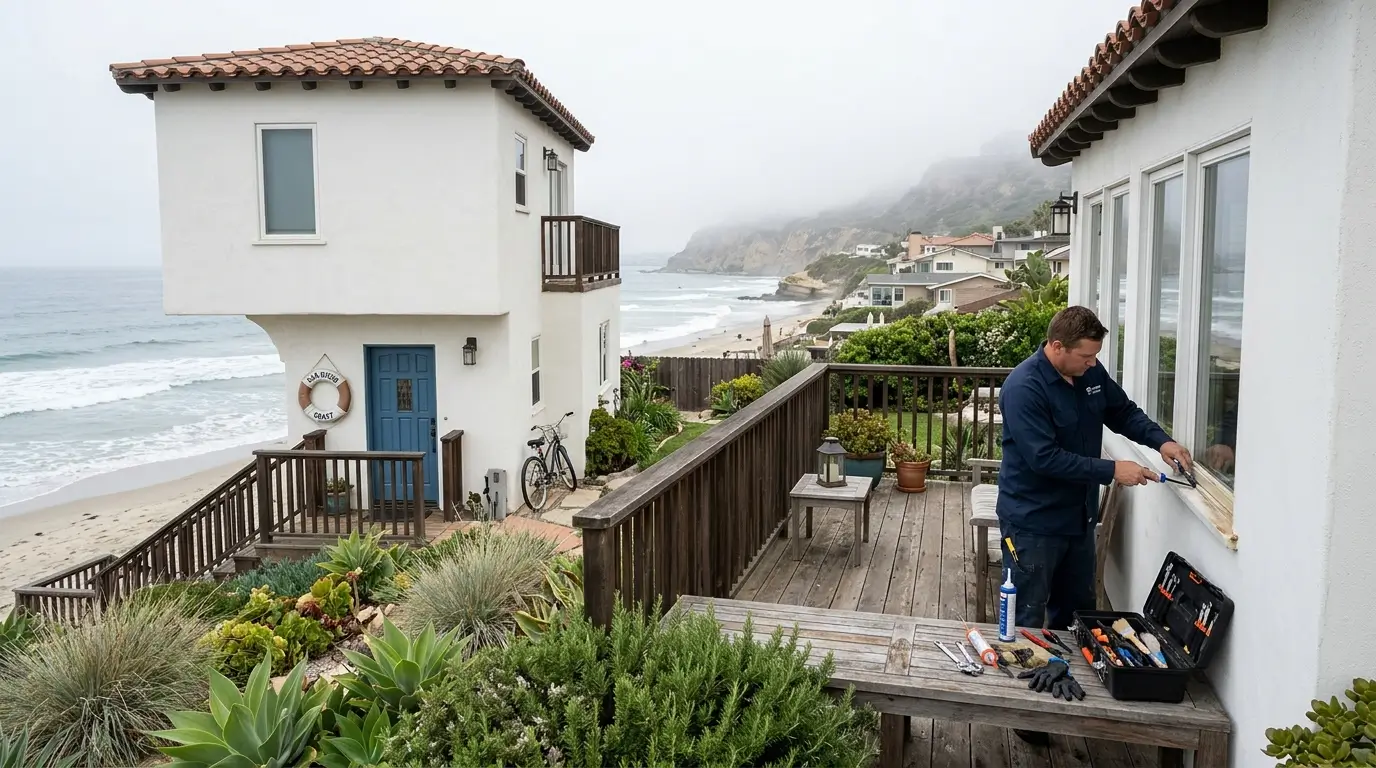
A rental in Pacific Beach, Ocean Beach, Point Loma, or La Jolla ages differently than one in Escondido or Mira Mesa. The same sea air that makes the coast desirable carries salt and moisture into everything it touches, and owners who maintain a coastal home on an inland schedule tend to find out the hard way. Here’s what makes the coast different, where the wear shows up, and how to turn it into a simple calendar.
Key Takeaways
The marine layer is most noticeable in May and June, bringing moisture and low clouds to the coast, with less of it farther inland.
EPA says to keep indoor humidity below 60 percent, ideally between 30 and 50 percent, and to dry anything wet within 24 to 48 hours.
Salt on outdoor HVAC equipment accelerates corrosion, so coastal units benefit from gentle fresh-water rinsing and, at replacement, corrosion-protected coils.
DOE says to clean or replace air conditioner filters every month or two during cooling season and to keep condensate drains clear.
Dated photos and service records protect both your maintenance budget and any warranty claim.
What Makes the Coast Different
Reporting that quotes a National Weather Service San Diego meteorologist describes the marine layer as a shallow slice of cool air above the water that often forms fog or clouds, most noticeable in May and June. NWS also describes how cool, moist Pacific air moves inland overnight and produces low clouds that can linger along the coast into late morning or longer. For a property, two things follow. Moisture is more constant on the coast, which matters indoors, and that same air carries salt, which matters outdoors. Both problems develop slowly and look minor until they aren’t.
HVAC and Mechanical Equipment
Salt is hardest on equipment that lives outside. One Oceanside HVAC contractor explains that coastal humidity turns airborne sea salt into a corrosive film on condenser coils, fins, and cabinet metal. Coastal contractors commonly recommend periodic fresh-water rinses with the power off and a gentle stream, and corrosion-protected coils when a unit is replaced. Ask your HVAC vendor to set the rinse interval for each property’s exposure, since sources vary. Avoid pressure washers, because DOE notes that the aluminum fins on coils are easily bent. Corrosion damage may not be covered under a standard equipment warranty, so check the manufacturer’s terms and keep dated service records.
The basics matter just as much. DOE says to clean or replace filters every month or two during the cooling season, check the evaporator coil yearly, and clear condensate drain channels periodically. EPA adds that keeping air conditioning drip pans clean and drain lines unobstructed helps control moisture. These steps apply to whatever heating and cooling equipment a coastal home has, including wall units and ductless systems. Our maintenance program coordinates this kind of recurring service through qualified vendors.
Exteriors: Metal, Paint, Sealants, and Drainage
Walk the exterior and look at anything metal. Railings, gates, light fixtures, garage hardware, and fasteners corrode faster in salty air, so when something needs replacing, choose corrosion-resistant hardware rather than the cheapest option. Check caulk and sealants around windows and doors, look for stucco cracks and peeling paint, and clear sliding door tracks of salt and debris. Water that gets behind a failing seal is a slow leak you won’t see until the damage is done. EPA’s moisture guidance also calls for cleaning and repairing roof gutters regularly and making sure the ground slopes away from the foundation.
Inside: Moisture, Mold, and Appliances
EPA’s mold guidance is plain: the key to mold control is moisture control, indoor humidity should stay below 60 percent and ideally between 30 and 50 percent, and wet materials should be dried within 24 to 48 hours. Condensation on windows, walls, or pipes can be a sign of high humidity. On the coast, that means checking that bathroom exhaust fans actually move air, looking under sinks and behind appliances for slow leaks, and sniffing for musty odors in closets and north-facing rooms. Washer door seals and dishwasher gaskets deserve a look too, since they stay damp. EPA’s guidance is to clean up mold promptly and fix the water problem at its source. Ask tenants to run fans during showers and cooking, and to report leaks and musty smells early, and make that easy with an online maintenance request page.
A Simple Seasonal Calendar
Spring, before May: Test bathroom fans, replace HVAC filters, inspect sealants and caulk, clear gutters and drainage.
May through July: Watch for condensation and musty odors, flush condensate drains, and rinse the outdoor condenser as your vendor advises.
Fall, before the rains: Inspect the roof and gutters, check drainage away from the foundation, and service heating equipment.
Winter: After storms, check ceilings, windows, and under sinks, and dry anything wet within 24 to 48 hours.
Every turnover: Photograph exterior metal, outdoor equipment, window tracks, and under-sink areas, and record the date of the last HVAC service.
Document Everything
A maintenance calendar only helps if there’s a record behind it. Photograph exterior metal, outdoor equipment, window tracks, and under-sink areas at every move-in and move-out, and keep dated invoices for HVAC service, coil rinses, and sealant work. Those records help you separate normal coastal wear from tenant-caused damage when it’s time to account for a deposit, and they give you documentation if a manufacturer questions how a corroded unit was maintained. Owners can review maintenance history and statements in the secure owner portal, and our owner resources page is a good starting point.
FAQ
How far inland does salt air affect a home?
It varies with wind and terrain, so exposure is best judged property by property. Coastal neighborhoods get the most, and a quick look at outdoor equipment and metal fixtures will show whether a home is affected.
Should I rinse an outdoor AC unit myself?
Coastal contractors commonly recommend a gentle fresh-water rinse with the power off, but have your HVAC vendor set the schedule and avoid pressure washers, which can bend the coil fins.
What humidity level should I aim for indoors?
EPA recommends keeping indoor humidity below 60 percent, ideally between 30 and 50 percent.
How quickly should water damage be dried?
EPA says dry water-damaged areas and items within 24 to 48 hours to prevent mold growth.
Maintain the Coast Like the Coast
Coastal San Diego rentals reward owners who treat salt and moisture as a schedule rather than a surprise. Small, regular checks cost far less than replacing a corroded condenser or remediating a hidden leak. If you’d rather not track all of this yourself, our San Diego property management team documents each property’s condition at move-in and move-out and coordinates the maintenance that keeps a coastal home in shape.